

Choosing between custom website development and template-based solutions is one of the most critical decisions you'll make for your online presence. Whether you're launching a startup, expanding an established business, or helping clients as a web design agency, this choice affects everything from your budget to your long-term growth potential. The good news? Both approaches have their place, and understanding when to use each can save you time, money, and headaches down the road.
This comprehensive comparison will walk you through the key differences between custom website development and template-based solutions, helping you make an informed decision that aligns with your specific needs, budget, and timeline.
Understanding Your Website Development Options
Website development has evolved dramatically over the past decade, giving businesses more choices than ever before. Today's landscape offers everything from drag-and-drop builders to fully custom coded solutions, each serving different needs and budgets.
What Is Custom Website Development?
Custom website development involves building a website from scratch, tailored specifically to your business requirements. This approach starts with a blank canvas, where developers write code to create unique functionality, design elements, and user experiences that align perfectly with your brand and business goals.
The custom development process typically involves several phases: discovery and planning, wireframing and design, front-end development, back-end programming, testing, and deployment. Each phase is meticulously crafted to meet your specific requirements, resulting in a website that's truly one-of-a-kind.
Why It Matters: Custom website development gives you complete control over every aspect of your site, from the underlying architecture to the smallest design details. This level of control becomes crucial as your business grows and evolves.
What Are Template-Based Solutions?
Template-based website development uses pre-designed themes or templates as the foundation for your website. These templates come with predefined layouts, styling, and often built-in functionality that you can customize to varying degrees depending on the platform.
Popular template platforms include WordPress themes, Shopify themes, Squarespace templates, and website builders like Wix or Webflow. These solutions offer a faster path to launch, with many design decisions already made and tested by the template creators.
The Hybrid Approach: Premium Templates with Custom Modifications
Between fully custom development and basic templates lies a middle ground that many businesses find appealing. This approach starts with a high-quality premium template and then applies custom modifications to achieve specific functionality or design requirements.
Detailed Comparison: Custom vs Template Website Development
Development Timeline and Speed to Market
Custom Website Development Timeline:
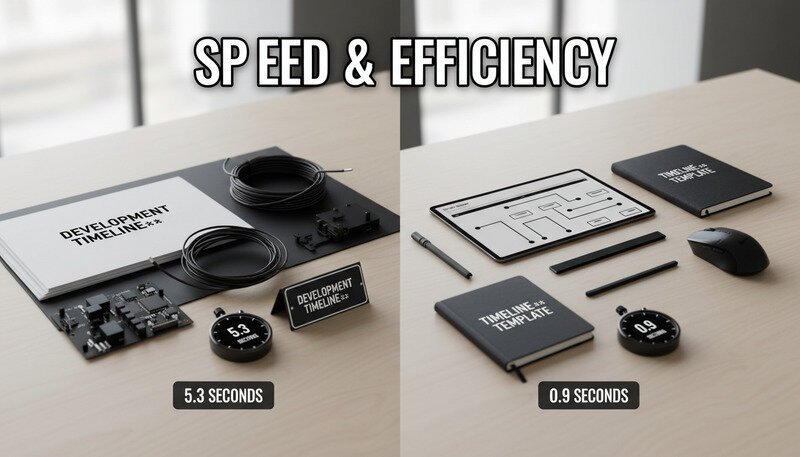
Custom projects typically require 8-20 weeks from concept to launch, depending on complexity. The timeline includes discovery sessions, wireframing, design mockups, development phases, testing, and revisions. Complex e-commerce sites or web applications can extend beyond six months.
The extended timeline reflects the thoroughness of the custom approach. Every element requires individual attention, from database architecture to responsive design implementation. However, this investment in time often pays dividends in long-term performance and scalability.
Template-Based Development Timeline:
Template solutions can launch within 1-4 weeks, sometimes even faster for simple sites. The accelerated timeline comes from leveraging pre-built components and established design frameworks. Most of the development time focuses on content creation, customization, and configuration rather than building from scratch.
Pro Tip: If you need to launch quickly to capture market opportunities or meet specific deadlines, template solutions provide the speed advantage you need. You can always migrate to a custom solution later as your business grows.
Cost Analysis and Budget Considerations
The financial investment varies dramatically between approaches, affecting both upfront costs and long-term expenses.
Custom Website Development Costs
Custom website development typically ranges from $15,000 to $150,000+ for business websites, with e-commerce and complex applications reaching even higher. These costs reflect the specialized expertise required, extensive development time, and unique problem-solving involved in creating something from scratch.
The investment includes strategy sessions, user experience design, custom coding, quality assurance testing, and project management. While the upfront cost is substantial, custom sites often provide better long-term value through improved performance, scalability, and competitive advantages.
Template-Based Development Costs
Template solutions start as low as $500-$5,000 for basic implementations, with more sophisticated customizations reaching $10,000-$25,000. The lower costs stem from leveraging existing code, design work, and functionality that's already been developed and tested.
Ongoing costs include template licensing fees, hosting, and potential limitations that might require workarounds or additional plugins. While initially more affordable, these costs can accumulate over time, especially if you need extensive customizations.
Design Flexibility and Brand Uniqueness
Custom Development Design Freedom:
Custom website development offers unlimited design possibilities. Every pixel, interaction, and user experience element can be crafted to match your exact vision and brand requirements. This flexibility becomes particularly valuable for businesses with strong brand identities or unique user experience needs.
Custom designs can incorporate innovative layouts, advanced animations, and specialized functionality that sets your website apart from competitors. The design process involves creating original concepts rather than adapting existing templates.
Template Design Constraints and Opportunities:
Templates provide professionally designed starting points but within predefined constraints. While modern templates offer significant customization options, you're ultimately working within the template's structural framework and design philosophy.
High-quality templates from platforms like Dope Theme offer extensive customization options, allowing you to modify colors, fonts, layouts, and content while maintaining the template's core design integrity. This balance provides professional results without the custom design investment.
Key Takeaway: Template constraints aren't necessarily limitations—they're design decisions made by experienced professionals that can guide you toward proven, effective layouts and user experiences.
Technical Performance and Optimization
Performance differences between custom and template solutions depend heavily on implementation quality rather than the approach itself.
Custom Development Performance Advantages:
Well-executed custom development can achieve optimal performance through lean code, efficient database queries, and tailored optimization strategies. Developers can eliminate unnecessary features, optimize loading sequences, and implement advanced caching strategies specific to your use case.
Custom sites avoid the bloat that sometimes affects template-based solutions, where unused features and generic code can slow down performance. However, poorly executed custom development can perform worse than well-optimized templates.
Template Performance Considerations:
Modern premium templates are increasingly performance-focused, with developers optimizing code for speed and efficiency. Platforms like WordPress have evolved to support advanced caching, content delivery networks, and performance optimization plugins.
The key to template performance lies in choosing quality templates from reputable developers and implementing proper optimization practices. Many templates now achieve excellent Core Web Vitals scores when properly configured.
Scalability and Future Growth
Custom Development Scalability:
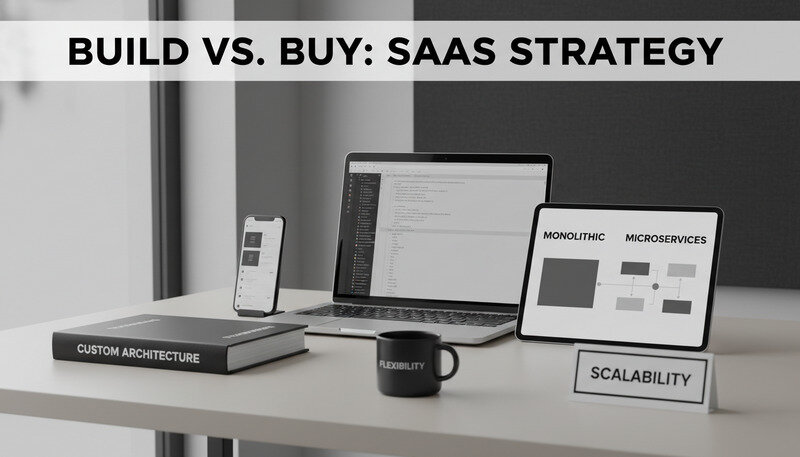
Custom websites are built with your specific growth plans in mind, making them inherently more scalable for your particular use case. The architecture can accommodate future features, traffic increases, and business model changes without requiring fundamental restructuring.
Custom solutions excel when you need specialized functionality, complex integrations, or unique user workflows that standard templates can't accommodate. As your business evolves, custom sites can evolve with you through targeted updates and feature additions.
Template Scalability Realities:
Templates can scale effectively within their intended scope, but may hit limitations when your needs exceed the template's original design parameters. Adding complex functionality or significantly altering user workflows might require extensive workarounds or template changes.
However, many businesses find that high-quality templates scale adequately for their needs, especially when choosing templates designed for growth and backed by ongoing developer support.
Comparison of Development Approaches
Key Factors Comparison
| Factor | Custom Development | Template-Based | Hybrid Approach |
|---|---|---|---|
| Timeline | 8-20+ weeks | 1-4 weeks | 3-8 weeks |
| Initial Cost | $15K-$150K+ | $500-$25K | $5K-$50K |
| Design Flexibility | Unlimited | Limited to template structure | Moderate customization |
| Performance | Optimized for specific needs | Varies by template quality | Good with proper optimization |
| Scalability | Highly scalable | Limited by template constraints | Moderate scalability |
| Maintenance | Requires developer expertise | User-friendly updates | Mixed requirements |
When Each Approach Makes Sense
Custom Development Is Best For:
* Large enterprises with complex requirements
* Businesses with unique functionality needs
* Companies requiring extensive third-party integrations
* Organizations with substantial budgets and longer timelines
* Brands requiring completely unique user experiences
Template Solutions Work Best For:
* Small to medium businesses with standard requirements
* Startups needing quick market entry
* Budget-conscious projects
* Businesses with straightforward functionality needs
* Companies wanting proven, tested designs
Hybrid Approaches Suit:
* Growing businesses outgrowing basic templates
* Companies needing specific custom features
* Organizations balancing budget with customization needs
* Businesses requiring moderate uniqueness
Expert Tip: Your choice doesn't have to be permanent. Many successful businesses start with templates and migrate to custom solutions as they grow and their needs become more sophisticated.
Pros and Cons Analysis
Custom Website Development Advantages
Complete Control and Ownership:
Custom development gives you complete ownership of your website's code, design, and functionality. You're not dependent on third-party template developers or platform limitations. This ownership extends to intellectual property rights and the ability to modify anything without restrictions.
Optimized Performance:
Custom sites can achieve superior performance through tailored optimization strategies. Developers can eliminate unnecessary code, optimize database queries for your specific use case, and implement advanced caching strategies that generic templates can't match.
Unlimited Scalability:
Custom architecture is designed with your growth plans in mind, making it easier to add features, handle increased traffic, and adapt to changing business requirements without fundamental restructuring.
Competitive Advantage:
A truly custom website can provide significant competitive advantages through unique user experiences, innovative functionality, and brand differentiation that templates simply cannot match.
Custom Development Disadvantages
High Initial Investment:
The substantial upfront cost can be prohibitive for many businesses, especially startups and small companies with limited budgets. The investment requires careful financial planning and often involves significant business risk.
Extended Development Timeline:
Custom projects require months of development time, potentially causing you to miss market opportunities or delay business launches. The extended timeline also means longer periods before seeing return on investment.
Ongoing Maintenance Complexity:
Custom sites require developer expertise for updates, security patches, and feature additions. This ongoing dependency can create bottlenecks and additional costs for routine maintenance tasks.
Higher Risk Profile:
Custom development involves more variables and potential points of failure. Poor execution can result in websites that perform worse than quality templates while costing significantly more.
Template-Based Development Benefits
Rapid Deployment:
Templates enable quick launches, allowing you to establish your online presence and start generating business results within weeks rather than months. This speed advantage is crucial for time-sensitive opportunities.
Proven Design Patterns:
Quality templates incorporate design patterns that have been tested across thousands of implementations. You benefit from collective user experience knowledge and proven conversion optimization strategies.
Cost-Effective Solution:
Lower upfront costs make professional websites accessible to businesses of all sizes. The reduced financial risk allows for experimentation and iteration without major investments.
Built-in Functionality:
Modern templates include sophisticated features like responsive design, SEO optimization, and e-commerce capabilities that would require significant custom development investment.
Community Support:
Popular template platforms offer extensive documentation, community forums, and third-party plugins that provide solutions to common challenges and feature requests.
Template Solution Limitations
Design Constraints:
While customizable, templates work within predefined structural limitations. Achieving truly unique designs may require extensive modifications that approach custom development costs.
Performance Variability:
Template performance depends heavily on the template developer's optimization efforts. Some templates include unnecessary features or inefficient code that can impact site speed and user experience.
Dependency on Template Developers:
Your website's future depends on the template developer's continued support and updates. Discontinued templates can create security vulnerabilities and compatibility issues.
Limited Uniqueness:
Other businesses may use the same template, potentially creating brand confusion or reducing your competitive differentiation in the marketplace.
Decision Framework: Choosing the Right Approach
Assessing Your Business Requirements
Functionality Needs Analysis:
Start by documenting your website's required functionality in detail. Create a comprehensive list that includes user registration systems, e-commerce capabilities, content management needs, third-party integrations, and any specialized features unique to your industry.
For standard business websites requiring contact forms, content pages, and basic e-commerce, templates often provide adequate functionality. However, if you need custom user dashboards, complex workflow automation, or specialized industry tools, custom development becomes necessary.
Brand Differentiation Requirements:
Evaluate how important visual uniqueness is to your brand strategy. Companies in crowded markets or those building premium brands often benefit from custom designs that set them apart from competitors using similar templates.
Consider your brand's maturity and market position. Established brands with strong identities may require custom solutions to properly represent their brand values, while newer businesses might benefit from proven template designs while building their market presence.
Budget and Timeline Considerations
Total Cost of Ownership Analysis:
Consider how development timeline affects your business objectives. If you're entering a competitive market or have specific launch deadlines, template solutions provide the speed advantage necessary to capture opportunities.
For businesses with longer-term strategic initiatives or complex requirements that won't change significantly, the extended custom development timeline may be worthwhile for the superior end result.
Pro Tip: Create a detailed requirements document before making your decision. This exercise often reveals whether your needs align better with template capabilities or require custom development.
Technical Expertise and Resources
Internal Team Capabilities:
Assess your team's technical expertise for ongoing website management. Custom solutions often require developer knowledge for routine updates and modifications, while template-based sites can typically be managed by non-technical team members.
Consider your long-term staffing plans and whether you'll have access to technical expertise for ongoing maintenance and updates. This factor significantly impacts the total cost of ownership for both approaches.
Growth Trajectory Planning:
Evaluate your business growth plans and how they might affect your website requirements. Rapidly growing businesses might outgrow template limitations quickly, making custom development a better long-term investment despite higher initial costs.
Companies with stable, well-defined requirements might find templates provide everything they need without the complexity and cost of custom development.
Risk Tolerance Assessment
Business Risk Evaluation:
Custom development involves higher financial risk but potentially greater rewards through competitive advantages and optimized performance. Template solutions offer lower risk with proven results but limited differentiation potential.
Consider your business's risk tolerance and financial stability. Startups and small businesses might prefer the lower-risk template approach, while established companies with substantial resources can better absorb custom development risks.
Technical Risk Management:
Evaluate your comfort level with technical complexity and potential issues. Custom development introduces more variables and potential points of failure, while templates leverage tested, proven solutions with established support systems.
Making the Most of Your Choice
Maximizing Template Success
Choosing Quality Templates:
Success with template-based development starts with selecting high-quality templates from reputable developers. Look for templates with regular updates, good documentation, responsive design, and strong performance optimization.
Platforms like Dope Theme offer professionally designed templates that balance customization flexibility with proven performance, giving you the best of both worlds without custom development costs.
Customization Best Practices:
Focus customizations on branding elements, content, and functionality rather than fundamental structural changes. Work within the template's design philosophy to maintain performance and visual coherence while achieving your brand goals.
Prioritize customizations that provide the most business value, such as conversion optimization, user experience improvements, and brand alignment. Avoid extensive modifications that undermine the template's tested design patterns.
Performance Optimization:
Implement proper optimization practices including image compression, caching configuration, and content delivery networks. Many template performance issues stem from poor implementation rather than template quality.
Regular maintenance and updates ensure your template-based site continues performing well and remains secure. Establish update schedules and monitoring practices to maintain optimal performance.
Custom Development Success Strategies
Clear Requirements Documentation:
Successful custom development requires detailed, well-documented requirements that all stakeholders understand and agree upon. Invest time in the discovery phase to prevent costly changes and scope creep during development.
Create user stories, wireframes, and functional specifications that clearly communicate your vision to the development team. This documentation serves as a roadmap and helps prevent misunderstandings that lead to project delays.
Choosing the Right Development Team:
Select developers with experience in your industry and technology requirements. Review portfolios, check references, and ensure the team has the expertise needed for your specific project requirements.
Establish clear communication protocols and project management processes to keep development on track. Regular check-ins and milestone reviews help identify issues early and maintain project momentum.
Planning for Long-term Success:
Build maintenance and update processes into your custom development plan from the beginning. Establish relationships with developers who can provide ongoing support and plan for future feature additions and improvements.
Document your custom system thoroughly to facilitate future updates and modifications. Good documentation reduces dependency on specific developers and makes long-term maintenance more manageable.
Common Questions About Website Development Approaches
How do I know if my business has outgrown a template solution?
Several indicators suggest you might need to consider custom development. If you're consistently hitting template limitations, requiring extensive workarounds for basic functionality, or finding that your growth is constrained by your website's capabilities, it may be time to explore custom solutions.
Performance issues that can't be resolved through optimization, the need for complex user workflows, or requirements for specialized functionality that templates can't accommodate are clear signs that custom development might provide better value despite the higher investment.
The decision often comes down to cost-benefit analysis. If the limitations of your template solution are costing you business opportunities or requiring expensive workarounds, custom development may actually be more economical in the long run.
Can I migrate from a template to a custom solution later?
Yes, migration from template to custom solutions is definitely possible, though it requires careful planning and execution. The process typically involves analyzing your existing site's functionality, designing new architecture, migrating content and data, and implementing redirects to maintain SEO value.
Migration costs vary depending on the complexity of your existing site and the scope of the new custom solution. However, starting with a template doesn't lock you into that approach permanently. Many successful businesses begin with templates and migrate to custom solutions as they grow and their needs become more sophisticated.
Plan your migration during slower business periods to minimize disruption, and work with experienced developers who understand both template systems and custom development to ensure a smooth transition.
What ongoing maintenance should I expect with each approach?
Template-based websites typically require routine updates for the template, plugins, and content management system. Most of these updates can be handled by non-technical team members, though some may require developer assistance for complex customizations or compatibility issues.
Custom websites require more specialized maintenance, including security updates, performance monitoring, and feature modifications that typically need developer expertise. However, custom sites often require less frequent updates since they're not dependent on third-party template updates.
Budget for ongoing maintenance costs with both approaches. Template sites might have lower maintenance costs but require more frequent attention, while custom sites have higher per-incident costs but may need maintenance less frequently.
How important is mobile responsiveness in my decision?
Mobile responsiveness is crucial regardless of your chosen approach, as mobile traffic now represents the majority of web browsing. Both quality templates and custom development should prioritize mobile-first design and responsive functionality.
Templates often include tested responsive designs that work well across devices, while custom development allows for optimized mobile experiences tailored to your specific user behaviors and business needs.
The key difference lies in customization capability. Custom development enables specialized mobile features and optimizations that templates might not support, while templates provide proven responsive designs that work well for most use cases.
What role does SEO play in choosing between custom and template development?
Both approaches can achieve excellent SEO results when properly implemented. The key factors for SEO success include site speed, mobile responsiveness, clean code structure, and content quality rather than whether you use custom or template development.
Custom development allows for more granular SEO optimization and the ability to implement advanced technical SEO strategies. However, quality templates often include built-in SEO best practices and optimization features that provide excellent results without custom development costs.
Focus on choosing solutions that prioritize performance, clean code structure, and SEO best practices regardless of the development approach. The content strategy and ongoing optimization efforts often matter more than the underlying development method.
How do I evaluate the quality of a template or development team?
For templates, examine the developer's portfolio, update frequency, documentation quality, and user reviews. Look for templates that demonstrate good performance scores, clean code structure, and responsive design across devices. Active support communities and regular updates indicate ongoing quality commitment.
When evaluating custom development teams, review their portfolio for projects similar to your requirements, check client references, and assess their communication and project management processes. Technical expertise should be balanced with business understanding and the ability to translate your requirements into effective solutions.
Request detailed proposals that demonstrate understanding of your requirements and include clear timelines, deliverables, and ongoing support plans. Quality teams will ask detailed questions about your needs and provide comprehensive project planning.
The Bottom Line
The choice between custom website development and template-based solutions ultimately depends on your specific business needs, budget, timeline, and growth plans. Both approaches can deliver excellent results when properly executed and aligned with your requirements. Get started with Dope Theme to explore high-quality template options that bridge the gap between affordability and professional results. Ready to get started? Visit Dope Theme to learn more.